
Evaluating the Impact of Edible Coating on the Shelf Life of Carrot (Daucus carota) and Green Pepper (Capsicum annuum)
DOI:
10.54117/ijamb.v4i1.54Published:
2025-05-17Issue:
Vol. 4 No. 1 (2025): Jan-JunKeywords:
Edible coating, Green peeper, Carrot, Microbial quality, Proximate, Vitamin compositionArticles
Downloads
How to Cite
Downloads
Abstract
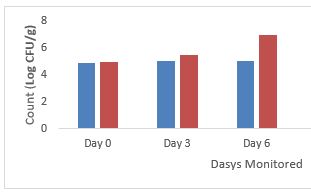
Edible coatings have emerged as a promising method to extend the shelf-life of fresh produce, including carrots and green peppers. This study investigates the impacted influence of coating of the carrots and peppers stored for 12 days. Standard microbial analysis was done using standard methods. The Total heterotrophic bacteria count (THBC) in coated carrots and peppers ranged from 8.8x10⁴ CFU/g to 1.51x10⁶ CFU/g while the THBC in pepper ranged from 4.4x10⁴ CFU/g to 9.4x10⁵ CFU/g. The THBC in uncoated carrot ranged from 8.8x10⁴ CFU/g to 2.8x10⁶ CFU/g while the THBC in uncoated pepper ranged 9.4x10⁵ CFU/g to 1.9x10⁶ CFU/g. The Staphylococcus count in coated carrots ranged 6.9x10³ CFU/g to 9.4x10⁶ cfu/g while the Staphylococcus count in pepper ranged from 4x10³ CFU/g to 8.8x10³ CFU/g. The Staphylococcus count in Uncoated carrot and pepper ranged from 9.4x10³ CFU/g to 3.8x10⁴ CFU/g and 8.8x10³ CFU/g to 1.02x10⁴ CFU/g respectively. The fungi count in Uncoated carrot ranged 3x10³ CFU/g to 2.2x10⁴ CFU/g while the fungi count in pepper ranged from 2.2x10³ CFU/g to 1.9x10⁴ CFU/g. The fungi count in coated carrots ranged from 1.2x10³ CFU/g to 3x10³ CFU/g while the fungi count in pepper ranged from 1 4x10³ to 2.2x10³ CFU/g. The Coliform count in coated carrots ranged from 2.2x10³ to 1.02x10⁴ CFU/g to while the Coliform count in pepper ranged from 3.0x10³ CFU/g to 1.29x10⁴ CFU/g. The Coliform count in Uncoated carrot ranged from 7.6x10³ CFU/g to 1.12x10⁴ CFU/g while the Coliform pepper ranged from 5.9x10³ CFU/g to 1.42x10⁴ CFU/g. Dominant bacteria included Staphylococcus aureus (24.6%), Bacillus subtilis (24.6%), and Escherichia coli (14.7%), while fungi were predominantly Aspergillus niger (31%) and Aspergillus flavus (27.6%). Proximate analysis revealed uncoated carrots had 5.40% ash, 30.40% moisture, and 42.62% carbohydrates initially, with changes observed by day 15. Similarly, uncoated peppers had 80.32% moisture, 5.90% protein, and 5.50% carbohydrates on day 0. Coated samples showed minimal changes in nutritional composition over time. The study concludes that honey wax coating significantly reduces microbial load, extends shelf life, and maintains the nutritional quality of carrots and peppers, recommending its application for preserving vegetables.
Author Biographies
Nnenna Jennifer Omorodion, Department of Microbiology, University of Port Harcourt, PMB 5323 Rivers State, Nigeria.
Princess Uche Osuala, Department of Microbiology, University of Port Harcourt, PMB 5323 Rivers State, Nigeria.
License
Copyright (c) 2025 Nnenna Jennifer Omorodion, Princess Uche Osuala

This work is licensed under a Creative Commons Attribution 4.0 International License.
CC BY 4.0