
Prophylactic Potential of the Most Potent Synergistic Biological Agent against Bacterial Infections from Smoked Fish and Chicken
DOI:
10.54117/ijamb.v4i2.57Published:
2025-05-31Issue:
Vol. 4 No. 2 (2025): Jul-AugKeywords:
Smoked-fish, Chicken-meat, Biological-agents, Extracts, Lactobacillus, In vivoArticles
Downloads
How to Cite
Downloads
Abstract
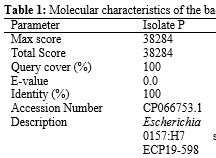
Bacterial infections from smoked fish and chicken pose significant risks to consumer health and also increase the spread of resistance strains. Therefore, the need for effective prophylactic strategies, and identifying and evaluating the prophylactic potential of potent synergistic biological agents could offer a promising solution. This study was undertaken to investigate the prophylactic potential of the most potent synergistic biological agent against bacterial infections from smoked fish and chicken, exploring its efficacy in preventing infections and promoting public health. A total of 280 samples that comprises 40 samples each of native chicken meat, layers chicken meat, broiler chicken meat, Chupea havengus (Herring/sawa), Truchurus trachurus (Horse Mackerel/Kote), Scomber Scombrus (Atlantic Mackerel/Titus) and Sphyraema barracuda (panla). The synergistic effect of the medicinal plants and Lactobacillus species was carried out using in vitro method. The prophylactic activity of the most potent synergistic agent was carried out using in vivo method. The data obtained were analyzed using one-way analysis of variance (ANOVA) and Turkey’s test as a post hoc analysis. The study showed that the mixture of Piper guineense (PU), Ocimum gratissimum (OR) and Gongronema latifolium (GA) in 2:1:1 doses augmented with the mixture of L. acidophilus strain NC56 (LAN56) and L. plantarum stain 2359 (LP2359) in 2:1 doses significantly (p≤0.05) reduced the pathogenic features of Escherichia coli 0157:H7 strain ECP19-598 (ECEC1), staphylococcus aureus strain JP18269 (SAJP1), Listeria monocytogenes strain LM16 (LMLM1) and Salmonella enterica serovar Enteritidis EC20110358 (SEEC2) isolated from smoked fish and chicken meat. Therefore, this study has shown the occurrences of ECEC1, SAJP1, LMLM1 and SEEC2 in the studied samples. The isolates showed significant pathological features that were reduced/prevented by the studied biological agents, of which OR+PU+GU augmented with LAN56 + LP2359 was the most effective.
Author Biographies
C. C. Ekechukwu, Biology Education Department, Federal College of Education, Asaba, Delta State.
S. O. Umeh, Department of Applied Microbiology & Brewing, Faculty of Biosciences, Nnamdi Azikiwe University Awka, Nigeria.
I. H. Iheukwumere, Department of Microbiology, Faculty of Natural Sciences, Chukwuemeka Odumegwu Ojukwu University, Anambra State, Nigeria.
C. M. Iheukwumere, Department of Applied Microbiology & Brewing, Faculty of Biosciences, Nnamdi Azikiwe University Awka, Nigeria.
License
Copyright (c) 2025 C. C. Ekechukwu, S. O. Umeh, I. H. Iheukwumere, C. M. Iheukwumere

This work is licensed under a Creative Commons Attribution 4.0 International License.
CC BY 4.0