Nutritional and Functional Properties of Wheat, Unripe Banana and Pigeon Pea Flour Blend and Physical and Quality of Bread Made from the Blend
DOI:
https://doi.org/10.54117/jybw1n27Keywords:
flour blends, functional properties, sensory properties, pigeon pea flourAbstract
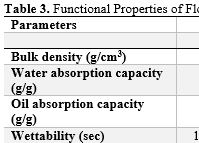
Flour blends were produced from wheat, unripe banana and pigeon pea. They were formulated into the ratios (w/w) 100:0:0, 70:10:20, 60:15:25 and 50:20:30, designated as sample A, B, C, and D respectively. Formulated samples were analysed for their nutritional and functional properties, and the physical and chemical properties of bread produced from the blends were also investigated which were compared to 100% wheat flour. There was no significant difference (P>0.05) in the moisture content among the samples. There was an increase in the protein and ash contents as unripe banana and pigeon flours were increased. For functional properties, there was no significant difference (P>0.05) between the formulated samples and the control (100% wheat) in bulk density. Wettability decreased with increasing addition of unripe banana and pigeon pea. For the mineral composition, iron and potassium content were higher in the formulated samples, there was an increase with increasing addition of unripe banana in iron and potassium contents. The sensory mean scores values showed that in terms of overall acceptability, bread produced from 100% wheat flour was the most preferred by the panellists. This study has shown that flour which is higher in protein than the conventional wheat flour can be produced from wheat, unripe banana and pigeon pea flour. Consumption of the bread could help to alleviate the problem of protein-energy malnutrition that is still prevalent in some communities in Nigeria and could also promote the utilization of these crops.
Downloads
Published
Issue
Section
License
Copyright (c) 2026 Iyornim Rachel Atuake, Aniekan Sunday Henshaw

This work is licensed under a Creative Commons Attribution 4.0 International License.