Isolation and Identification of Spoilage Organisms in Bakery Products: Comparative Study of the Effects of Formulation Factors and Preservatives
DOI:
https://doi.org/10.54117/ebnwzy15Keywords:
Bakery products, preservatives, shelf life, formulation factor, ambient storage, physicochemical properties, sensory qualityAbstract
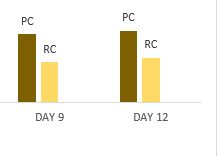
Bakery products are highly susceptible to microbial spoilage, which compromises shelf life, safety, and overall quality. This study evaluated the effects of chemical preservatives and formulation-based interventions on the microbial stability, physicochemical properties, and sensory quality of bread and cake stored at ambient temperature for 12 days. Four samples were assessed: preserved bread (PB) containing calcium propionate, unpreserved bread (UB), preserved cake (PC) formulated with calcium propionate and vinegar, and reformulated cake (RC) produced using hot milk without chemical preservatives. Microbiological analyses, pH and moisture determination, and sensory evaluation were conducted at regular intervals during storage. Results indicated that bread samples exhibited higher microbial loads than cakes. Total bacterial counts ranged from 0–8.15 log₁₀ CFU/g in PB and 0–7.18 log₁₀ CFU/g in UB, while lower values were recorded for cakes, particularly RC (0–4.0 log₁₀ CFU/g). Unpreserved bread showed the highest coliform, Staphylococcal, and fungal counts, suggesting post-baking contamination and rapid spoilage. Visible mold growth appeared by day 9 in UB and PC, whereas PB and RC remained visually mold-free throughout storage. A diverse range of bacterial and fungal genera associated with spoilage and food safety concerns were isolated across samples. Physicochemical analysis revealed declining pH and increasing moisture content in bread samples, conditions that favored microbial growth. In contrast, RC maintained relatively stable pH and moisture levels, contributing to its superior microbial stability. Sensory evaluation showed a gradual decline in acceptability across all samples; however, RC retained the highest overall sensory scores by day 12. The study demonstrates that process-based interventions, such as hot-milk treatment, can significantly enhance the microbial stability and sensory quality of bakery products. While calcium propionate remains effective, combining preservatives with improved processing, hygiene, and moisture control offers a more sustainable approach to extending bakery product shelf life.
Downloads
Published
Issue
Section
License
Copyright (c) 2026 Nnenna J. P. Omorodion, Amarachi M. Obiesie

This work is licensed under a Creative Commons Attribution 4.0 International License.