Development and Evaluation of Chia Fortified Cassava Soy Biscuits
DOI:
https://doi.org/10.54117/jzx5gs54Keywords:
Cassava, Composite flour, Functional food, Gluten-free, NutritionalAbstract
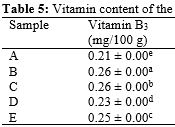
Biscuits are widely consumed cereal-based snacks; however, rising wheat import costs and increasing gluten intolerance in African especially, Nigeria necessitates exploring alternative flour sources. This study investigates the use of composite flours made from cassava, soybean, and chia seeds for biscuit production. Cassava flour was prepared through fermentation and drying, while soybean and chia seeds were soaked, dried, and milled. Composite flours were formulated in varying ratios, with cassava content ranging from 60% to 100%, and used to produce biscuits. The flours and biscuits were subjected to proximate, anti-nutrient, functional, vitamin, mineral and sensory analyses. Results of the flour blends have moisture, fat, ash, fibre, protein, carbohydrate content ranging from 8.05 to 11.10%, 4.10 to 4.30%, 3.15 to 4.31%, 2.06 to 3.04, 4.89 to 11.06% and 67.57 to 75.83%, respectively. The tannins (0.24-1.08 mg/g) and phytate (0.49-1.54 mg/g) content were within the acceptable recommended safe level. Vitamin B1 and B3 levels, as well as calcium and potassium content, improved with increased in soybeans and chia powder in the composite flour. Sensory evaluation showed that Sample A (60% cassava, 30% soybean, 10% chia) had the highest acceptability in taste and texture, while Sample C (80% cassava, 15% soybean, 5% chia) exhibited optimal nutritional value. These findings support the development of nutritious, gluten-free biscuits tailored to evolving consumer health needs and dietary preferences.
Downloads
Published
Issue
Section
License
Copyright (c) 2026 Oladoyin R. Ohijeagbon, Sameerah S. Umaru, Rachel O. Adetola, Esther T. Oladimeji

This work is licensed under a Creative Commons Attribution 4.0 International License.