Molecular Analysis and In Vitro Pathogenicity Evaluation of Bacteria Isolated from Frozen Chicken
DOI:
https://doi.org/10.54117/mddwzy68Keywords:
Frozen Chicken, Foodborne illnesses, Molecular, Pathogenicity, Public health concernsAbstract
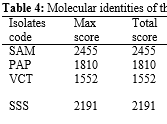
The consumption of frozen chicken has been associated with foodborne illnesses, posing significant public health concerns. Despite the importance of food safety, there is a dearth of information on the pathogenic potential of bacteria isolated from frozen chicken. This study aims to investigate the in vitro pathogenicity of bacteria from frozen chicken, addressing the gap in knowledge on the food safety implications of these microorganisms. Various strains of bacteria were isolated from frozen chicken samples collected from different locations in Awka Metropolis. The isolates were characterized based on their cultural, morphological, biochemical and molecular features. The pathogenic profiles of the isolates were evaluated using an in vitro approach. Statistical analysis was performed using the student "t" test and one-way analysis of variance (ANOVA). The bacterial isolates identified in the frozen chicken samples included Staphylococcus aureus strain C868, Pseudomonas aeruginosa strain 214, Vibrio cholerae strain 112Vc02 and Salmonella enterica subspecies enterica serovar Enteritidis. Significant pathological effects were observed in blood agar, and reaction with Congo red when the bacterial isolates were exposed using in vitro technique. This study demonstrates that different strains of bacteria isolated from frozen chicken samples exhibited distinct and varied pathological effects with Vibrio cholerae strain 112Vc02 showing the highest pathological features.
Downloads
Published
Issue
Section
License
Copyright (c) 2026 O. H. Obiefuna, E. C. Onwuofor, A. C. Nduka, B. O. Uba, I. N. Ebenebe, F. O. N. Ngozika, C. A. Mere, P. A. Egbe

This work is licensed under a Creative Commons Attribution 4.0 International License.