Nutritional, Antinutritional, Functional and Organoleptic Properties of Cookies Produced from Composite Flours of Wheat (Triticum Aestivum), Pumpkin Seed (Cucurbita Maxima), and African Yam Bean (Sphenostylis stenocarpa)
DOI:
https://doi.org/10.54117/4w82zf03Keywords:
Composite flour, Functional cookie, Antinutritional factors, Malnutrition intervention, Nutritional compositionAbstract
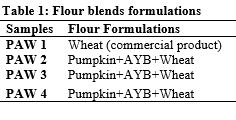
Cookies are widely consumed bakery products, but conventional wheat-based cookies often lack essential nutrients. This study formulated and evaluated cookies produced from wheat-pumpkin seed-African yam bean composite flour blends to enhance their nutritional value. The composite flours were prepared by incorporating varying proportions of pumpkin seed and African yam bean into wheat flour. Standard analytical methods were used to determine the proximate composition, antinutrient content, functional properties, amino acid profile, and sensory attributes of the cookies. Results showed that protein content significantly increased with the inclusion of pumpkin seed and African yam bean, with PAW4 (20% pumpkin seed + 40% African yam bean + 40% wheat flour) exhibiting the highest protein level (23.76%). Fiber and ash contents were also elevated, enhancing the nutritional profile. The composite cookies had lower trypsin inhibitor, tannin, and oxalate contents, improving digestibility. Functional properties, such as foaming and emulsification capacities, were enhanced, indicating suitability for bakery applications. Amino acid profiling revealed improved essential amino acid composition, particularly glutamic acid and leucine. Sensory evaluation showed that while composite cookies had slightly lower acceptability ratings than the 100% wheat control, they remained within acceptable limits. Incorporating pumpkin seed and African yam bean into wheat-based cookies improved their nutritional and functional properties while maintaining sensory acceptability. These composite cookies have the potential to serve as a nutritious, cost-effective alternative to conventional cookies, addressing protein-energy malnutrition in developing regions.
Downloads
Published
Issue
Section
License
Copyright (c) 2025 Praise Elisha Obiwusi, Iyanu Caleb Alagbe, Imosi Oyesola Olatunji, Sunday Abiodun Malomo, Emmanuel Olanrewaju Sangotoye

This work is licensed under a Creative Commons Attribution 4.0 International License.